So, almost five years on, I´m back. The blog that was supposed to be (One Sketch A Day on Wordpress) is totally gone from the internet, and I have been completely buried in studies, going for a degree in nursing, which I accomplished. I am now a certified nurse working at an old folk´s home. During this period of going back to school I also had to go through treatment for breast cancer, which went well, considering. On top of that, my mum-in-law and my best friend Marie passed away, from old age and cancer, respectively. Oh, and two summers ago I broke both my arms. And the husband broke his leg, and had some trouble with high blood pressure. In the end, I had to take 4 months off (doctor´s orders) to just process all my stress before I could finish my final practice round. But, I reached my goal in the end.
They say that you can completely change your life in five years, and that is certainly true. Five years ago I wouldn´t even have been able to imagine the life I´m having today. The work is endlessly satisfying, but also endlessly demanding. One could easily be present and useful 24/7.
My problem right now is to find a healthy work-life balance. For so long I poured all my energy into studies and surviving, that now I find my spare time empty of meaning and connection. This leads to me thinking too much about work when I´m supposed to be resting from it. What to do?
I do miss writing. I let go of my ambition to write a novel when I decided to go into nursing, but I now find that the novel is still calling me. However, I can´t seem to even be able to read any more. Studying so hard and all the stress has somehow damaged my ability to read for pleasure, and I feel frustrated about that, since literature has always been my deepest love.
So, bottom line: I´m back blogging about reading because I need to find my way back to my love of literature. I need to get reading again.
Showing posts with label personal development. Show all posts
2020-02-02
2014-10-23
Drawing Your Life
I have already told you about Danny Gregory´s fabulous book about creativity, "The Artistic Licence". He is also one of the people behind Sketchbook Skool, which looks like a pretty interesting project. I was curious for something more personal by him, and got this, "Everyday Matters", which is a memoir of sorts, a compilation I would assume, of pages from his own personal illustrated diary, with a no doubt heavily edited text to make a coherent story.
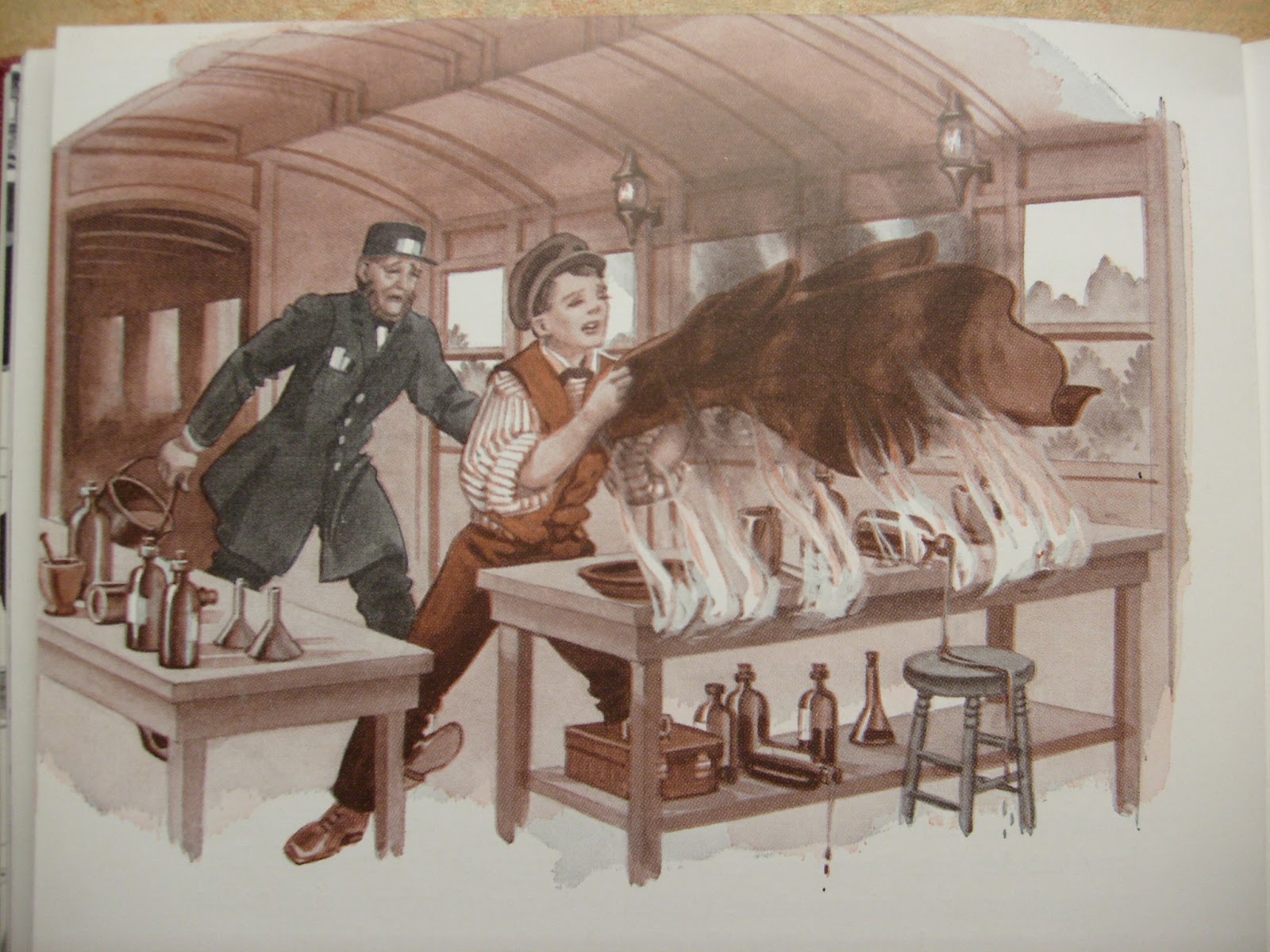
It starts when he and his wife Patti are a young, successful couple in New York, he is an advertiser, she a stylist, they have a dog and a new baby, and the terrible thing happens: she falls onto the railway track and is run over by a train. Her spine is crushed and she ends up wheel chair bound.
This book has none of that cheerful entusiasm that "The Artistic Licence" had, as you can imagine. This is personal, this is an account of what it´s like to have life - as you expected it to be - taken away from you. Gregory starts to draw in an attempt to deal with things - the word he keeps using is "slow"; this new life is slower than it used to be, and that is frustrating. Some things he took for granted are suddenly out of reach. Some things he took for granted now seems incredibly valuable. Other things he took for granted means nothing any more.
These aren´t cute drawings of beautiful still lifes. There is no sentimental glow to any of Gregory´s drawings. His surroundings - as he sees it - is what I recognize when I look around my own home, just the stuff of every day. Gregory draws himself into his new life. What Gregory is communicating to me is a lack of self-awareness - a mindfulness - that I find admirable and difficult to obtain. Perhaps only really difficult times can get you there. Or drawing, I hope.
It starts when he and his wife Patti are a young, successful couple in New York, he is an advertiser, she a stylist, they have a dog and a new baby, and the terrible thing happens: she falls onto the railway track and is run over by a train. Her spine is crushed and she ends up wheel chair bound.
This book has none of that cheerful entusiasm that "The Artistic Licence" had, as you can imagine. This is personal, this is an account of what it´s like to have life - as you expected it to be - taken away from you. Gregory starts to draw in an attempt to deal with things - the word he keeps using is "slow"; this new life is slower than it used to be, and that is frustrating. Some things he took for granted are suddenly out of reach. Some things he took for granted now seems incredibly valuable. Other things he took for granted means nothing any more.
These aren´t cute drawings of beautiful still lifes. There is no sentimental glow to any of Gregory´s drawings. His surroundings - as he sees it - is what I recognize when I look around my own home, just the stuff of every day. Gregory draws himself into his new life. What Gregory is communicating to me is a lack of self-awareness - a mindfulness - that I find admirable and difficult to obtain. Perhaps only really difficult times can get you there. Or drawing, I hope.
2014-10-18
Re-reading
This post at Austin Kleon´s blog made me smile, as I had just been tossing out a few pages in my diary on how my reading was frustrating me. A prayer-answer, if ever.
I am really into no 14 on his list right now: "I will re-read favorite books the way I watch favorite movies and play favorite records over and over." Actually, I feel a bit like I have gone into some kind of literary fetal position, if that makes any sense. Comfort reading in the extreme, for me anyhow. I am trying to be kind to myself, though, as life is crazy right now, both inside and outside. Things are changing - in a fundamental way - I can feel it and I am eager for it, but it´s not yet ready. It´s like being very, very hungry and having to wait another three hours for the stew to brew. (I don´t suppose stews actually brew, but I like how that rhyme.)
Also, no 8: "I will not finish books I don’t like", no 10: "I will throw a book across the room", and no 21: "If I hate a book, I will keep my mouth shut". Actually, even no 22: "I will make liberal use of the phrase, “It wasn’t for me.”". Yeah. It´s painful to realize someone was hurt by a remark you made and you can´t take it back. So, will I only blog books I like? Can´t really blog something I stopped reading and tossed across the room, I guess. (Though I´m sure I have done.)
As you can tell, I am having a bit of a reading crisis and it´s been coming on slowly all year. It´s just a small part of the whole change, though. Since I stopped working on that novel of mine and started doing other things, reading just isn´t the same, and the reasons for picking up a book has changed. Writing anything, even blogging, has changed. Or rather, is changing. I just made a list of things to work towards, with a deadline that is nine months ahead of me, so the fetal analogy isn´t so far off. I am tempted to make changes happen, make declarations of this and that, but it just isn´t the time. I´ll just wait and see.
I am really into no 14 on his list right now: "I will re-read favorite books the way I watch favorite movies and play favorite records over and over." Actually, I feel a bit like I have gone into some kind of literary fetal position, if that makes any sense. Comfort reading in the extreme, for me anyhow. I am trying to be kind to myself, though, as life is crazy right now, both inside and outside. Things are changing - in a fundamental way - I can feel it and I am eager for it, but it´s not yet ready. It´s like being very, very hungry and having to wait another three hours for the stew to brew. (I don´t suppose stews actually brew, but I like how that rhyme.)
Also, no 8: "I will not finish books I don’t like", no 10: "I will throw a book across the room", and no 21: "If I hate a book, I will keep my mouth shut". Actually, even no 22: "I will make liberal use of the phrase, “It wasn’t for me.”". Yeah. It´s painful to realize someone was hurt by a remark you made and you can´t take it back. So, will I only blog books I like? Can´t really blog something I stopped reading and tossed across the room, I guess. (Though I´m sure I have done.)
As you can tell, I am having a bit of a reading crisis and it´s been coming on slowly all year. It´s just a small part of the whole change, though. Since I stopped working on that novel of mine and started doing other things, reading just isn´t the same, and the reasons for picking up a book has changed. Writing anything, even blogging, has changed. Or rather, is changing. I just made a list of things to work towards, with a deadline that is nine months ahead of me, so the fetal analogy isn´t so far off. I am tempted to make changes happen, make declarations of this and that, but it just isn´t the time. I´ll just wait and see.
2014-09-02
The Creative Licence
Ever since 1992 I have been in the habit of keeping a diary. For the first ten years, it was mainly a therapeutic tool, helping me to unveil some not so healthy structures and behaviours in myself and people around me. After that, however, I felt that the habit was restraining me rather than helping me forward but I didn´t know how to break out of the mould I had created. I tried to quit, I tried other ways, but always came back to the same thing I had been doing; it was kin to an addiction.
I wish I had stumbled upon Danny Gregory´s book "The Creative Licence" a few years ago. (Actually, I would have needed it before it was written, probably!) The subtitle is "Giving yourself permission to be the artist you truly are", and it is an enthusiastic class in how to do an illustrated journal, whether you think you can draw or not. It is about seeing your world differently, challenging your perceptions and bringing impressions to the page, mixing it around and creating ideas for whatever you are into, not just the visual arts.
Gregory has a story of his own, of course, about the creative person who got lost in advertising and found his way back and now wants to share and encourage others. Personal experience is always a good place to start. He also has several suggestions on how to start a journal, how to re-start, challenge yourself to "draw ugly", "be specific", "draw negative space", and such things. Lots of illustrations, naturally, not just from his own journals but from other people´s journals as well. He also encourages the reader to experiment with writing, arguing that writing is drawing too. My only objection to this book is, actually, that at times, it is very hard to read, because the writing is so awkward and wonky. A challenge, perhaps, but also a source of irritation. But it´s a minor objection.
I´d like to finish with a quote that made me think, not because of what is said, but because of who says it:
I wish I had stumbled upon Danny Gregory´s book "The Creative Licence" a few years ago. (Actually, I would have needed it before it was written, probably!) The subtitle is "Giving yourself permission to be the artist you truly are", and it is an enthusiastic class in how to do an illustrated journal, whether you think you can draw or not. It is about seeing your world differently, challenging your perceptions and bringing impressions to the page, mixing it around and creating ideas for whatever you are into, not just the visual arts.
Drawing is seeing [...] looking is a language [..] In Genesis, God has Adam name the animals. Labels make abstract thinking possible. But because we overdo it, looking replaces seeing, and we soon stop seeing things for what they truly are. We say "tree" and stop saying "elm" [...]. This is where drawing comes from. You can look at something slowly and carefully [...] you stop thinking about bills and aches and grievances and chores. You, your pen, your paper, your subject, you just are.This is drawing as mindfulness practice. And being mindful is the door into the state of creativity. It´s like that old cliché: the nutty professor/inventor who gets lost in his own thoughts and work, forgetting all about sleeping, eating and the world around him.
Gregory has a story of his own, of course, about the creative person who got lost in advertising and found his way back and now wants to share and encourage others. Personal experience is always a good place to start. He also has several suggestions on how to start a journal, how to re-start, challenge yourself to "draw ugly", "be specific", "draw negative space", and such things. Lots of illustrations, naturally, not just from his own journals but from other people´s journals as well. He also encourages the reader to experiment with writing, arguing that writing is drawing too. My only objection to this book is, actually, that at times, it is very hard to read, because the writing is so awkward and wonky. A challenge, perhaps, but also a source of irritation. But it´s a minor objection.
I´d like to finish with a quote that made me think, not because of what is said, but because of who says it:
"I cannot tell you how happy I am to have taken up drawing again. I´ve been thinking of it, but I always considered the thing impossible and beyond my reach." - Vincent van Gogh, in a letter to his brother.If you are bored and don´t know what to do, or you know what you want to do but don´t know how to do it, this can be the book for you. You don´t have to be wanting to learn how to do art, just wanting the courage to put your impressions and ideas on anything down on paper. That´s what Gregory is teaching: courage to create.
2014-04-29
Books To Help Me Manage Myself
I have just finished "Manage your day-to-day: Build your routine, find your focus & sharpen your creative mind", which is a collaboration of a bunch of people, edited by Jocelyn K Glei. It is published by Behance, in a project they call 99U (a reference to the quote by Edison about the 99% perspiration you have to put in to get anything done), trying to provide help for making creative ideas happen. I have another one in this series that I haven´t yet started, "Maximize your potential: Grow your expertise, take bold risks & build an incredible career". At the moment, however, I am reading "Daily rituals - How great minds make time, find inspiration, and get to work", by Mason Currey. All really long titles, you practically don´t need more introduction than that.
Personally, I have tried for thirteen years to put my writing first, and I can´t say I have succeeded very well. At all. I could say that Life has come between my pen and I, but it would be more honest to say that other people´s needs and wishes have been prioritized, by me. The thing is, writing is such a long-term commitment, with unsure rewards far into the future (yes, why even do it? my best answer is: because it is hard, and because literature is the best thing ever), that it usually makes sense on a day-to-day basis to prioritize the short-term. Almost everyone I know fall into this trap.
Sometimes one has no choice, there really are times when friends and family must come first. These times are dangerous, because you loose any momentum you have built up, and getting back in the saddle, as it were, is not easy. So, you must have a good routine, but you must also have a method of getting back to that routine You will use this method a lot. A lot, I tell you. It is a constant struggle, and books like these do two things: they remind you that you are not alone, and offer some good advice. Even if you have heard it all before, it is not a bad thing to be reminded now and then.
I have been looking very critically lately at how I actually spend my time, and toyed with this pyramid shape as I was trying to get my priorities straight. It occured to me that for the longest time, it has been upside down. I also get depressed every once in a while thinking that I am getting so old - I´ll be fifty within an eyeblink. On the other hand, many people I know and know of, haven´t gotten this far even, or are still struggling with stuff I have actually gotten through. I suppose everyone has their own path, right? And their own timetable. Another consolation is that if I ever get anything finished, it will probably be a bit more mature and interesting. He who lives will see. Or as the mum-in-law said once: pain and wrinkles is the price you pay for surviving; the alternative is worse.
Personally, I have tried for thirteen years to put my writing first, and I can´t say I have succeeded very well. At all. I could say that Life has come between my pen and I, but it would be more honest to say that other people´s needs and wishes have been prioritized, by me. The thing is, writing is such a long-term commitment, with unsure rewards far into the future (yes, why even do it? my best answer is: because it is hard, and because literature is the best thing ever), that it usually makes sense on a day-to-day basis to prioritize the short-term. Almost everyone I know fall into this trap.
Sometimes one has no choice, there really are times when friends and family must come first. These times are dangerous, because you loose any momentum you have built up, and getting back in the saddle, as it were, is not easy. So, you must have a good routine, but you must also have a method of getting back to that routine You will use this method a lot. A lot, I tell you. It is a constant struggle, and books like these do two things: they remind you that you are not alone, and offer some good advice. Even if you have heard it all before, it is not a bad thing to be reminded now and then.
I have been looking very critically lately at how I actually spend my time, and toyed with this pyramid shape as I was trying to get my priorities straight. It occured to me that for the longest time, it has been upside down. I also get depressed every once in a while thinking that I am getting so old - I´ll be fifty within an eyeblink. On the other hand, many people I know and know of, haven´t gotten this far even, or are still struggling with stuff I have actually gotten through. I suppose everyone has their own path, right? And their own timetable. Another consolation is that if I ever get anything finished, it will probably be a bit more mature and interesting. He who lives will see. Or as the mum-in-law said once: pain and wrinkles is the price you pay for surviving; the alternative is worse.
2014-04-21
Creative Procrastination
I am struggling with Proust - it is going a little bit faster now, since I have switched to Swedish. I usually imagine myself a pretty fluent reader of English, but some authors, like Proust and A S Byatt, humbles me. As we, my friend and I, started this read, the local library had removed Proust from the e-book collection, but we found a free English version online and started that. Since, however, the Swedish version has been reinstated at the e-book library. Good for me; I am now half-way through the first volume. And no, we are not reading all of them - not now, at least.
The most inspiring read during my hiatus was probably Austin Kleon´s two books on creativity, art, and publishing: "Steal Like An Artist" and "Show Your Work". Kleon works as he teaches, and books like these are all about the personality of the author, the right place, and the right time, I think. It´s not like they tell you anything new - but it´s the way they tell it. They were perfect for me a couple of months ago and really got me out of my slump.
I love the way Kleon works visually, and he reminded me that I was an enthusiastic mind-mapper from my early teens until I started History A at the university in 1994. That course was so packed with chronologically presented information that I just had to write as fast as the teacher talked; we had to learn the entire history of the world (more or less) in six months (priming for further history studies). For some reason, that threw me off mind-mapping, until now. I have now started to draw again, and play, which is good for me, I think. I certainly sleep better, and that must be a good sign.
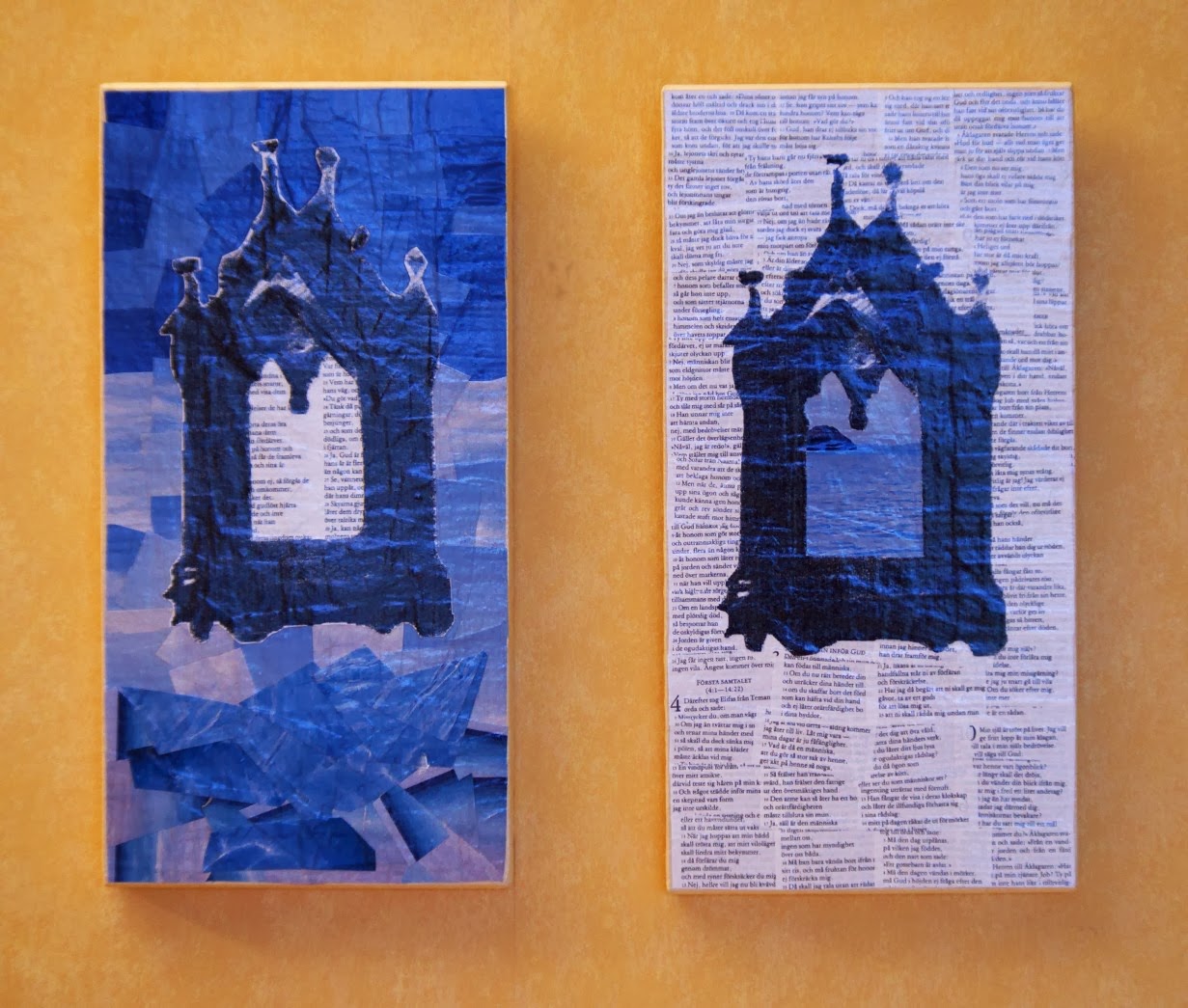
Kleon has also published a book of Newspaper Blackout poems, and includes a few in his other books. Inspired, I made some based on Proust (ok, I was procrastinating reading him).
The most inspiring read during my hiatus was probably Austin Kleon´s two books on creativity, art, and publishing: "Steal Like An Artist" and "Show Your Work". Kleon works as he teaches, and books like these are all about the personality of the author, the right place, and the right time, I think. It´s not like they tell you anything new - but it´s the way they tell it. They were perfect for me a couple of months ago and really got me out of my slump.
I love the way Kleon works visually, and he reminded me that I was an enthusiastic mind-mapper from my early teens until I started History A at the university in 1994. That course was so packed with chronologically presented information that I just had to write as fast as the teacher talked; we had to learn the entire history of the world (more or less) in six months (priming for further history studies). For some reason, that threw me off mind-mapping, until now. I have now started to draw again, and play, which is good for me, I think. I certainly sleep better, and that must be a good sign.
Kleon has also published a book of Newspaper Blackout poems, and includes a few in his other books. Inspired, I made some based on Proust (ok, I was procrastinating reading him).
Etiketter:
creativity,
non-fiction,
personal development
2014-01-16
Great Mentor
...one of the most important keys to the successful art life is to understand the nature of disappointment, and to recognize it as something that can provide either disincentive or encouragement. Disappointment is a disincentive if it leads to frustration and sense of failure. It’s possible, however, to recognize disappointment as a form of success: as has often been said, “Even the person who falls flat on their face is at least moving forward.”
I have spent a month, or more, slowly getting through Brooks Jensen´s "The Creative Life in Photography". This time, I haven´t had that high feeling of enlightenment while reading, but then, after devouring his "Letting Go of The Camera", I am fairly familiar with his basic ideas; perhaps the reading has been slow because I have been really thinking more about my own photography projects, implementing Jensen´s teaching. I see also that friends with a keen interest in photography, with Expensive Gear, are loosing interest because they are not thinking enough about what kinds of photos they want to make. It just doesn´t seem to be enough, in the long run, to want to "go out on a fine day and shoot some great pictures". It gets boring and disappointing if you come home with the same thing, over and over.
As Jensen says:
A project does not need to take a long time. There is nothing wrong with a project that develops slowly, and there may even be some virtues. But, more “spontaneous” projects, conceived and completed quickly, have their place in creative photography, too....and I have taken this to heart. Whenever I bring the camera, I try to formulate an idea about what I want to do differently this time. Sometimes I do it, sometimes I don´t. I had this idea about doing some proper, old-fashioned group photos for Christmas, but for some reason I didn´t think the mood was right. Or perhaps my mood wasn´t right. I am planning to give it another go, though. I suppose what I´m after is involving my friends and family in my creative process, and perhaps I need to think some more about how to make that a fun thing to do - for all of us. You know, how to make use of their creativity and make it a real collaboration. It´s very much trying to go beyond my comfort zone.
Another quote that caught my attention was this:
Figuratively and scientifically, a photograph is a slice of time, frozen for us to look at and see more intently than is possible at the speed of life. It is a “now” that is removed from the flow of time. Such language brings to mind what the Buddhist meditators call the “eternal now” — but in photography we have the ability to capture that eternal now and freeze its image — at least for a while, at least as long as the medium remains coherent. Indeed, no other media does this as well as photography.I have observed for some time that for me, the process of photography seem to anchor me to the present and give me more energy rather than tire me. I often hear the complaint about amateur photographers that they "hide" behind the lens, or that they are somehow not "there" in the moment, but just recording it or collecting it. It is true that some people can be said to photograph like scalp-hunters; I had an uncle once who would put my aunt in front of the Thing of Interest, take a snap and then go back to sit in the car and wait for the rest of us. But sometimes, this complaint means something else; it means: I want you to talk to me, be with me, instead of taking your photographs. This can be a valid complaint if you are often inaccessible to your loved ones, but more often than not, the conversation offered is more about other moments than the one we´re in right now, so conversation can be just another form of escaping the present moment.
Having Jensen as a kind of mentor is doing me good, I feel, both in my photography and in my writing. In my living, probably, as well. I am so happy about him that I have subscribed to Lenswork this year. I hope that will give me even more insight and inspiration!
2014-01-15
Autenticity & Strength
![]() |
| Completely unrelated illustration - longing for spring. |
I have been a follower of the Minimalists´ blog for a few years, and today they posted what is almost a short story. I like the conclusions: that when we are ourselves, however outrageous that person may seem, we are likely to connect with people and fit in anywhere.
A friend of mine once said that "we are never stronger than when we are ourselves". I don´t know if she got it from somewhere or if it came from the heart. It is true, though.
2013-12-19
A New Perspective on Storytelling
Now notice who is reading this book. Again see if you can connect with a sense of looking out at the world from behind your eyes. Notice that you are here in this moment reading, and notice too that the person behind these reading eyes was there when you ate breakfast this morning and was there when you were a child. You’ve been you your whole life, though there have been many changes in your thoughts, your feelings, your roles, and your body. At the very moment that you gaze at these lines of ink on paper, notice who is gazing. Hello. You have been you ever since you showed up in early childhood as a conscious human being, and your infantile amnesia fell away (about the same time that these deictic frames of I/you; here/there; and now/then made their appearance). This “I” is what some call the observing self (Deikman 1982). It is a sense that transcends both time and space, not literally but experientially since this sense is everywhere you go. Whatever happens to you, it is this “I” that will be part of your verbal knowledge of that experience.That is a quote from one of the most useful and interesting books I have read this year: "Get Out of Your Mind and Into Your Life: The New Acceptance and Commitment Therapy" by Steven C. Hayes and Spencer Smith. I read one of those agony aunt-columns in a newspaper, and became curious about this so called ACT, acceptance and commitment therapy. I decided to investigate and picked this book out from a selection available on amazon.
Bottom-line, this is about the practice of mindfulness, which I have learned a bit about from Eckhart Tolle. The root to suffering, says Hayes and Smith, is that we (or as Tolle calls it, our egos) tell stories about ourselves, other people, our lives, and our world, that define what we are and what we are able to do. This can be empowering, but often also causes distress and in some cases hinder us from doing what we want or need to do.
This is our point: humans suffer, in part, because they are verbal creatures. If this is so, then here is the problem: the verbal skills that create misery are too useful and central to human functioning to ever stop operating. That means suffering is an unavoidable part of the human condition, at least until we know how to better manage the skills language itself has given us.The therapy part of this book is about learning to defuse from the stories, and go beyond these self-imposed limitations. It is not easy though, to defuse from labels put on oneself by parents, friends, teachers and others.
There is an alternative: you can learn to look at your thoughts rather than from them. These cognitive defusion techniques are a core component of ACT. They help you to make the distinction between the world as structured by your thoughts, and thinking as an ongoing process. When your thoughts are about you yourself, defusion can help you to distinguish between the person doing the thinking and the verbal categories you apply to yourself through thinking. Defusion leads to peace of mind, not because the mental war necessarily stops but because you are not living inside the war zone anymore.This is so interesting, and I have learned some useful techniques for my hangups, although I must say that considering some of the examples of problems patients struggle with, I can only say (and with a great sense of gratitude) that I really have no problems. Perhaps the most useful thing about reading this book, for me, is a greater understanding of the suffering of some of my friends, which has at times been incomprehensible to me.
...the conceptualized self fits into a story that provides reasons for your actions and a self that provides coherence for your experiences. It is a kind of comfortable but suffocating coherence that leads relentlessly toward “more of the same.” Have you ever noticed that if someone thinks he is unimportant, most events in his life appear to confirm that view? Or have you ever observed that if someone sees herself as a victim, somehow she keeps ending up (in her mind or in actuality) being victimized?If you are interested in how the mind really works, how our thoughts govern our lives, and want to try some interesting new ways (at least they were new to me) to deal with whatever levels of discomfort or behavioural limitation that you experience, this could be a good read for you.
2013-11-18
Too Many Gods
I have once been in the same room as Neil Gaiman. In 2000, I decided that a job is a job is a job, and that literature is the only thing worthwhile. To celebrate, I emptied my savings account and went to the Book Fair in Gothenburg, where, among others, I saw Gaiman and Terry Pratchett giving a presentation on how they had collaborated on "Good Omens", which was about to be released in Swedish. I enjoyed them a lot, and later read the book (in English).
The other day I saw that Gaiman had written something in the Guardian (I think it was a piece on Lou Reed). He is good, I thought, I should read one of his. I did read something of his not long ago (ok, ten years), "American Gods". That was good, I thought, but what was it about? I remembered a Mr Wednesday and a tree, and that was all. I was a bit puzzled about remembering so little about the book and decided to read it again.
The protagonist is a kind, honest, loyal, and not stupid man in his thirties who goes by the name Shadow. He has an unfortunate tendency to attach himself to Bad People, though, and has just served three years in prison. When he is released, he is hired by a Mr Wednesday, a one-eyed elderly man with a silver tie-pin in the shape of a tree. Shadow is now drawn in to a world of gods, magic, and other trickery. A war is starting, between the old gods: fertilitygods, wargods, deathgods, tricksters, leprechauns, djinns, trolls, brownies, anything you can think of; and the new gods: electrical gadgets, highways, shopping malls, media, "intangibles" (like hedgefunds), and so forth.
After I finished it, I tried for days to write something about it, kept going on and on, page after page, trying to understand why it wasn´t working for me. In the end, I came to the conclusion that I wasn´t being fair, I was judging it as something it was not. It is not a good read, it is an entertainment read. An excellent entertainment read, however, and a highly recommendable one. Perfect for the holidays, if you are looking for something that´s well written, cleverly plotted, and very funny. But it will not change your life.
But I expected more; I read it once already and I persuaded myself it was more. Why is that? It occured to me that I must still have the notes from Gothenburg, but where? These days, all my archives are digital, but I still keep a filing cabinet which my husband refers to as my "X-files". I don´t know what he thinks I keep in there, and honestly I hardly remember, but anything earlier than 2005 should be there. It took me less than 30 seconds to find them (to which I credit an anal-retentive streak). Disappointingly, all I wrote about Neil Gaiman at the time was that he had long, black, curly hair and looked like a stray member of Slade. So no clues there. And "Good Omens" certainly wasn´t very profound, it was a good romp about Armageddon.
As I leafed through my notes I saw that I had attended several seminars to do with the publication of the new Swedish Bible translation (which I also read later, cover-to-cover if you can belive it). There was a particularly interesting one about holy texts in all the world religions: Christianity, Judaism, Islam, Buddhism. I still remember clearly some of the things being said in that seminar, I occasionaly quote from it. Perhaps it´s the topic: gods, religion. Perhaps I made some links of association there, and messed up my idea of what Gaiman and his work is about. Perhaps, also, I have become a more discerning reader; I am not at all unappreciative of Gaiman and "American Gods", but I confess, three days after I finished it, it´s already beginning to fade.
The other day I saw that Gaiman had written something in the Guardian (I think it was a piece on Lou Reed). He is good, I thought, I should read one of his. I did read something of his not long ago (ok, ten years), "American Gods". That was good, I thought, but what was it about? I remembered a Mr Wednesday and a tree, and that was all. I was a bit puzzled about remembering so little about the book and decided to read it again.
The protagonist is a kind, honest, loyal, and not stupid man in his thirties who goes by the name Shadow. He has an unfortunate tendency to attach himself to Bad People, though, and has just served three years in prison. When he is released, he is hired by a Mr Wednesday, a one-eyed elderly man with a silver tie-pin in the shape of a tree. Shadow is now drawn in to a world of gods, magic, and other trickery. A war is starting, between the old gods: fertilitygods, wargods, deathgods, tricksters, leprechauns, djinns, trolls, brownies, anything you can think of; and the new gods: electrical gadgets, highways, shopping malls, media, "intangibles" (like hedgefunds), and so forth.
![]() |
| A recent addition to my own pin collection. |
But I expected more; I read it once already and I persuaded myself it was more. Why is that? It occured to me that I must still have the notes from Gothenburg, but where? These days, all my archives are digital, but I still keep a filing cabinet which my husband refers to as my "X-files". I don´t know what he thinks I keep in there, and honestly I hardly remember, but anything earlier than 2005 should be there. It took me less than 30 seconds to find them (to which I credit an anal-retentive streak). Disappointingly, all I wrote about Neil Gaiman at the time was that he had long, black, curly hair and looked like a stray member of Slade. So no clues there. And "Good Omens" certainly wasn´t very profound, it was a good romp about Armageddon.
As I leafed through my notes I saw that I had attended several seminars to do with the publication of the new Swedish Bible translation (which I also read later, cover-to-cover if you can belive it). There was a particularly interesting one about holy texts in all the world religions: Christianity, Judaism, Islam, Buddhism. I still remember clearly some of the things being said in that seminar, I occasionaly quote from it. Perhaps it´s the topic: gods, religion. Perhaps I made some links of association there, and messed up my idea of what Gaiman and his work is about. Perhaps, also, I have become a more discerning reader; I am not at all unappreciative of Gaiman and "American Gods", but I confess, three days after I finished it, it´s already beginning to fade.
2013-10-15
The Power of Pain
I am really reading something entirely different, but I wedged in a real-live paperbook as part of an effort to try sorting out a backproblem. It´s not a big problem, I don´t have discs slipping or anything like that, but after a really big cold with a few months of coughing last year, it´s like my muscles freeze up between my shoulderblades and sometimes this spreads and I get stiff from head to toe, more or less.
I went to the doctor, finally; he said the bones in my spine lock together, and showed me a trick to get them to come off: you lie on the floor, knees pulled up, on a broomstick, which you place at a 90 degree angle to your spine. Then you move it one centimeter a minute. If that doesn´t help, a physiotherapist can shake me loose, he says. I got some stretching exercises as well. Apparently, one can not do too much stretching. It doesn´t feel as I got to the root of it, though. The knees are protesting, I sleep badly, and am rather irritable. If you ask me what I want most of all, it´s to stop time for a few months where I can be all alone and catch up.
All this made me think of a book I used to own, by French physiotherapist Thérèse Bertherat, "The Body Has Its Reasons" (1976, in France). I read it several times, but it was a long time ago and now I really only remember one exercise where you roll a ball under your foot to release muscle tension all along the back of your body. And I remember the word for her therapy: anti-gymnastics. I thought I might re-read it, but unfortunately it is not published in e-book format. Instead, I picked up a later book of hers from the library, "Kroppens budskap" (= the message of the body, or in the original: "Courrier du corp", 1981). In this book, she repeats her message and also writes about what she learned from publishing her first book. It´s quite interesting to read the stories of patients coming to her with the expectations from reading her first book.
It´s not really a self-help book, not the usual kind, anyway. There are a few exercises, but there is hardly a whole recipe for wellness, or the way to achieve a perfect, beautiful and symmetrical body, which is what she thinks we all have, or had, before we ruined it with warped habits and ideas. The exercises are more like demonstrations of what she is saying. We carry pain in our bodies, she says, and we encapsulate emotion that we don´t want to deal with, from emotional or physical trauma, or just the ongoing pain of a life badly lived. And, she says, backing this up with several examples, many, many of us don´t want to get well. Physical pain and suffering is percieved as a free pass from grown-up responsibilites and being accountable for one´s own life. She exempts those born with deformities and those crippled from disease, accidents or other kinds of violence, but really no others. She says we are capable of doing great harm to our bodies, but we are also able to heal them. But, she says, no therapist of any kind can do it for you.
I have heard this from others later, but I believe Bertherat was the first author that suggested this to me. I don´t question the truth of it; I see this unwillingness to change and grow in every person I know, myself very much included. We don´t go to the doctor when we should, we don´t take our medicine, we don´t do our exercises, we eat the bad food instead of the good, we don´t get enough sleep or rest, remain in crappy relationships, and what starts out as an easily curable little ache, may over time transform into something more sinister, more permanent, and much harder to deal with. It´s not easy, though. If pain, or prerequisits of pain, can remain in the body for years, one´s whole life even, and then add later events and circumstance to that, you get a complex problem that is not easy to understand. Which is why, I think, Dr Phil once said on his show that problems are complex, but solutions are easy. His point being, I suppose, that we should focus on solutions. But how do we know which one is the right solution? I´m not sure what Dr Phil would say, but I know some who would say that any solution is better than doing nothing: you have to start somewhere.
Keeping the health balance gets harder with age. I can see how I am much more fragile now and can´t really push my body to exist for long periods on little sleep, sugary foods, stressful demands. My body is saying "enough" and demanding some attention. However, there is a difference in saying to the world: "I can´t be at your beck and call, because I want to remain well," or saying "I can´t be at your beck and call because I am in so much pain (look how much pain I´m in!), and actually, you should wait on me." It´s easy to see who has the strongest currency, and the most power.
Towards the end of the book, this is what Bertherat says about (and to) her patients:
I went to the doctor, finally; he said the bones in my spine lock together, and showed me a trick to get them to come off: you lie on the floor, knees pulled up, on a broomstick, which you place at a 90 degree angle to your spine. Then you move it one centimeter a minute. If that doesn´t help, a physiotherapist can shake me loose, he says. I got some stretching exercises as well. Apparently, one can not do too much stretching. It doesn´t feel as I got to the root of it, though. The knees are protesting, I sleep badly, and am rather irritable. If you ask me what I want most of all, it´s to stop time for a few months where I can be all alone and catch up.
All this made me think of a book I used to own, by French physiotherapist Thérèse Bertherat, "The Body Has Its Reasons" (1976, in France). I read it several times, but it was a long time ago and now I really only remember one exercise where you roll a ball under your foot to release muscle tension all along the back of your body. And I remember the word for her therapy: anti-gymnastics. I thought I might re-read it, but unfortunately it is not published in e-book format. Instead, I picked up a later book of hers from the library, "Kroppens budskap" (= the message of the body, or in the original: "Courrier du corp", 1981). In this book, she repeats her message and also writes about what she learned from publishing her first book. It´s quite interesting to read the stories of patients coming to her with the expectations from reading her first book.
It´s not really a self-help book, not the usual kind, anyway. There are a few exercises, but there is hardly a whole recipe for wellness, or the way to achieve a perfect, beautiful and symmetrical body, which is what she thinks we all have, or had, before we ruined it with warped habits and ideas. The exercises are more like demonstrations of what she is saying. We carry pain in our bodies, she says, and we encapsulate emotion that we don´t want to deal with, from emotional or physical trauma, or just the ongoing pain of a life badly lived. And, she says, backing this up with several examples, many, many of us don´t want to get well. Physical pain and suffering is percieved as a free pass from grown-up responsibilites and being accountable for one´s own life. She exempts those born with deformities and those crippled from disease, accidents or other kinds of violence, but really no others. She says we are capable of doing great harm to our bodies, but we are also able to heal them. But, she says, no therapist of any kind can do it for you.
I have heard this from others later, but I believe Bertherat was the first author that suggested this to me. I don´t question the truth of it; I see this unwillingness to change and grow in every person I know, myself very much included. We don´t go to the doctor when we should, we don´t take our medicine, we don´t do our exercises, we eat the bad food instead of the good, we don´t get enough sleep or rest, remain in crappy relationships, and what starts out as an easily curable little ache, may over time transform into something more sinister, more permanent, and much harder to deal with. It´s not easy, though. If pain, or prerequisits of pain, can remain in the body for years, one´s whole life even, and then add later events and circumstance to that, you get a complex problem that is not easy to understand. Which is why, I think, Dr Phil once said on his show that problems are complex, but solutions are easy. His point being, I suppose, that we should focus on solutions. But how do we know which one is the right solution? I´m not sure what Dr Phil would say, but I know some who would say that any solution is better than doing nothing: you have to start somewhere.
Keeping the health balance gets harder with age. I can see how I am much more fragile now and can´t really push my body to exist for long periods on little sleep, sugary foods, stressful demands. My body is saying "enough" and demanding some attention. However, there is a difference in saying to the world: "I can´t be at your beck and call, because I want to remain well," or saying "I can´t be at your beck and call because I am in so much pain (look how much pain I´m in!), and actually, you should wait on me." It´s easy to see who has the strongest currency, and the most power.
Towards the end of the book, this is what Bertherat says about (and to) her patients:
"... those who have long been searching for themselves will often find confirmation of what they have found elsewhere, their mental confusion is confirmed in the confusion of the muscle- and nervous systems, and they also get confirmation of the connection - positive and negative - between all the aspects and expressions of their personality.
There are, however, people for whom this is only discouraging and even contemptible. Those who set a goal and a time limit to reach it will not like anti-gymnastics. I know anti-gymnastics are in its infancy and I can´t know any better than those who participate in my groups how far it can go. Even those who think they will one day be able to say "Heureka!" because all is revealed to them, will be disappointed. They think that their deepest truth "once and for all" shall be revealed to them. I, for my part, don´t believe in "once and for all"-revelations, but I do believe in a constant revelation, a prolonged work that is as subtle and as complex as a human being."
(my translation)For myself, I am thinking that perhaps I just want to do too much living and be all things to everybody. Perhaps my expectations are just too high. Oliver Burkeman in the Guardian has an interesting point. The truth is out there. And in here. Being constantly revealed.
2013-10-07
Norwegian Wood - Part I
Saturday, I did as I had intended and popped in at Studio 31 to check out the place and the vernissage of Natalie Avigdor. The artist was there of course, a very nice young woman with a very interesting project. Unfortunately, I was in a bit of a rush, and didn´t really have time to look properly, but I will return next week. (She has said it´s ok to take photographs so I will be able to show you more later.) In fact, I have decided to make a kind of parallell project to Avigdor´s. I will return to that later.
Avigdor has spent part of her youth in Luleå and Boden, and studied at the aesthetic programme at Luleå´s gymnasium (equivalent to high school in the US). She has then studied one year at Munka Folkhögskola in Skåne, the south of Sweden. Now she is at the Academy of Arts and Design, Bezalel, in Jerusalem.
She explained to me that this project is about three months of her life: August, September, and October of this year, that suddenly (a quote from her diary suggests a break-up in Oslo) was empty, without any plans. She decided to build a new life, make new friends, and create an alternative life to - I suppose - her life in Israel. During this time she has also travelled to Japan. The title of her project, and one of the paintings, is "Norwegian Wood", and this immediately made me think of Haruki Murakami´s novel of that name, which was also filmed a few years ago.
Avigdor is also participating in a performance with the art collective PAiN (Performance Art i Norr) at Galleri Syster the 16th of October. On PAiN´s website she says:
On a side note: If you have access to Swedish television and are interested in clothes as communication, you may want to watch a new series called "von Svenssons kläder" (= von Svensson´s clothes) about how we dress and why. The first episode was promising.
I am attracted by many things in Avigdor´s project: the diary, the paintings of trees and woods, the photographs from Tokyo, drawings by ballpoint pen (which is an instrument associated with writing and not so much the visual arts), the references to literature that I haven´t read but is on my reading list (the long list...), and also the way she has limited her project in a rather strict time frame. I mean, seriously, this girl is getting a lot done in just three months! I want some of that energy, I suppose, and I have also been thinking a lot this last year about what art means to me and how I let it work for me, with me, and through me. There is no doubt that really engaging with art in a deliberate way is good for my overall well-being, creativity, and not least, my writing.
So - how far can I take this? I toyed with the idea in my own diary and decided that there are several doors I can take in, out, or through Avigdor´s project. I will work on this for three weeks, and I have an idea that it would be interesting if it would end in a story of some sort. However, I´m trying to not have any expectations, not to make any plans, just to follow inquiries. Ask questions and see where they take me. It will not be anything like a three-month parallell life, but a three-week adventure, that´ll do me nicely.
![]() |
| Natalie Avigdor and painting "Norwegian wood". |
She explained to me that this project is about three months of her life: August, September, and October of this year, that suddenly (a quote from her diary suggests a break-up in Oslo) was empty, without any plans. She decided to build a new life, make new friends, and create an alternative life to - I suppose - her life in Israel. During this time she has also travelled to Japan. The title of her project, and one of the paintings, is "Norwegian Wood", and this immediately made me think of Haruki Murakami´s novel of that name, which was also filmed a few years ago.
Avigdor is also participating in a performance with the art collective PAiN (Performance Art i Norr) at Galleri Syster the 16th of October. On PAiN´s website she says:
"I am fascinated by performance art and think the boundries between real life and performance can be very diffuse." (my translation)She has done more performance art and one piece (is that the right word?) I found interesting is called "Projector", where she projects images on her body. Being interested in clothes and fashion (the media has been full of fashion weeks lately, as you may have noticed) it makes me reflect on how blurry the line between dressed and bare can be when one dresses with real intent. What I mean is, naked bodies are all the same - more or less. But choice of dress can be very individual and expressive. So in a sense, the intentional dresser can bare herself while putting clothes on, as well as hide herself. (And I suppose the same goes for the unintentional dresser...) Clothing can be a form of carapace, particularly perhaps for those who are in jobs where one is very vulnerable and sometimes has to be brave, like policemen, doctors, nurses, soldiers. Of course, I refer only to the aesthetic side of the garment in this line of argument; clothes naturally have functional aspects, as well as being tools of communication.
On a side note: If you have access to Swedish television and are interested in clothes as communication, you may want to watch a new series called "von Svenssons kläder" (= von Svensson´s clothes) about how we dress and why. The first episode was promising.
I am attracted by many things in Avigdor´s project: the diary, the paintings of trees and woods, the photographs from Tokyo, drawings by ballpoint pen (which is an instrument associated with writing and not so much the visual arts), the references to literature that I haven´t read but is on my reading list (the long list...), and also the way she has limited her project in a rather strict time frame. I mean, seriously, this girl is getting a lot done in just three months! I want some of that energy, I suppose, and I have also been thinking a lot this last year about what art means to me and how I let it work for me, with me, and through me. There is no doubt that really engaging with art in a deliberate way is good for my overall well-being, creativity, and not least, my writing.
So - how far can I take this? I toyed with the idea in my own diary and decided that there are several doors I can take in, out, or through Avigdor´s project. I will work on this for three weeks, and I have an idea that it would be interesting if it would end in a story of some sort. However, I´m trying to not have any expectations, not to make any plans, just to follow inquiries. Ask questions and see where they take me. It will not be anything like a three-month parallell life, but a three-week adventure, that´ll do me nicely.
Etiketter:
art,
personal development,
photography,
writing
2013-09-27
Minimalist Inspiration
Sometimes I just have the energy to read stuff I already know, but are too tired to remember. You know, a little pep talk. This little book, "The Minimalist Woman's Guide to Having it All" by Meg Wolfe, definitely falls into that category. As head of the domestic sanitation division, I am engaged in an eternal battle against clutter and grime, and sometimes the piles of the first that needs to be dealt with in order to get to the second just feels too overwhelming. And it´s the emotional side to it that trips me. Wolfe understands, and this is one of the things she has to say:
It´s a no-brainer really: empty the entire kitchen, put the stuff in the living room, clean the kitchen out, put back what we use and give the rest away (or throw it in the bin). Oddly, it didn´t even occur to me that I could before I read Wolfe. I suppose that after 22 years in the same flat, I have just gotten so rooted that I am stuck. I am surrounded by debris from old lifestyles, abandoned projects, well-meant but misguided gifts, and plain silly ideas.
Wolfe is a good rhetorician and she both enlightens and inspires me.
"There is an odd disconnect between keeping things for Just in Case or not wasting money and the way things are made, disposed of, and dumped into landfills. We don’t make the association between personal waste and landfill waste. So we create these little landfills inside our homes—and junk drawers—out of some inner notion that we won’t be wasting resources. The absurdity is lost upon us."
![]() |
| Not all ruins are pretty. |
"No doubt many of those unfinished dreams and projects cost a bit of money. So I ask you: Why are you paying for them twice or thrice over? All of those unresolved things are taking up space in your head, so there’s one extra cost. And they are taking up space in your residence, which is another cost. Goodness only knows what further cost they will take if they are hanging around for the rest of your life!"So true. I just took another look at my wardrobe and threw out another ten or fifteen pieces of clothing that I never wear. Take the pretty brown bluse that fits me perfectly, goes so well with my hair colour, and I have worn exactly once in what, three? four? years: I can´t fit a silk undershirt under it (low neckline) which makes it uncomfortable for sweaty hot summers, it has 3/4 length sleeves (and that low neckline) which makes it too cold to wear in the winter. Every time I see it I feel bad. I sometimes find myself wearing things that are uncomfortable to stop feeling so guilty about never using them!
Wolfe is a good rhetorician and she both enlightens and inspires me.
"It is time to live in the here and now, and not in the old mindset from five, ten or thirty years ago. You’re not that person anymore. You’re not in that time of your life anymore. If somewhere along the line you do decide to do those things, you’ll start fresh, from your current place in life, which is so much more satisfying. Freeing yourself up from both expectations and regrets is literally freeing yourself to live life in the fullest, in the here and now, without all the baggage from the past having a controlling vote. You’re free to move Onwards and Upwards."Meg Wolfe has a blog where she writes about minimalism, writing, and life. I understand from some reviews that if you follow her blog, this book may hold familiar ideas for you, but for me, this was the perfect read right now. And I will go see if that blog has more good stuff.
2013-09-17
Follow-up on the Mindless Eating
So, I realized the other day it´s been a year following the advice from Brian Wansink. What has happened to my foodscape?
Some things I did for the first few months didn´t work out in the long run, like making porridge every morning and baking cookies with raisins or stocking up on licorice (no one ate them!). And we have not stayed away from health-food; actually, the husband came home from Nashville converted to Whole Food-ism, and now we even drink ecological milk. I can´t imagine this is a bad thing.
In May, a doctor called me to tell me my blood-sugar was exceptionally high and needed to be checked out. The first test indicated that everything was probably all right, but I confess I was nervous about it. In July, I saw that BBC documentary by Dr Michael Mosley that everyone else had seen in March, and was so impressed that I started the much talked about 5:2 diet. This isn´t really a diet at all, but rather a method, not aimed at weight-loss primarily, but health and longevity.
Since then I have semi-fasted two days a week, and my sugar has gone down a bit - I am all out of danger of having diabetes, as a second round of testing has proved. I have also noticed that my vision is better, oddly enough, but then the fasting is supposed to lower your levels of growth hormones and turn the body to self-repair, so perhaps that´s what´s actually going on. I have no illusions that I will not be needing reading glasses eventually, though. Actually, the fasting method suits me well; I don´t normally have strong hunger feelings, nor do I really know when I´m full - which is why I gain when I eat socially. Fasting days are like a vacation from eating and takes the pressure off when I´m eating with others; I´m more relaxed about food issues overall.
Also, the intermittent fasting days make me more mindful of what I eat, which is great. My sweet-tooth seems to be gone, and when the number of meals I eat in a week has gone down, I am more keen on really good (for me) food when I actually do eat. I find that I am spending more time cooking, and going for recipes from my childhood. Perhaps that is just a phase.
Today I weigh 65 kilos, which is two less than last year, and perfect. I gained 3-4 kilos when we were on vacation (this really doesn´t sound much, but it pushes me into a size above what I normally wear, which is annoying - I don´t keep a two-sized wardrobe), but with the fasting I lost it pretty quickly. I don´t go under 65, though, and don´t really need to.
To summarize, Wansink´s advice has really changed the way we think about food, food purchases, and eating in this household. As long as we stay in this environment that we control ourselves, we stay slim and healthy. Add to that the semi-fasting for me, and I think I have pretty much nailed it for the future.
I´d be curious to know if anyone else has experience from the 5:2 method, and if you have any other effect by it than just the weight-loss?
- I have downsized my plates. Not for parties (that would look cheap!), but for everyday. One portion is about 20% smaller than I used to eat.
- We buy food in small packages. Instead of buying a large bag of chips, which I will eat most of, we buy two one-portion bags. If I crave chocolate, I don´t stock up, I go for the smallest piece in the store. To tell you the truth, they don´t really make small pieces any more.
- I started making desserts with fruit and meringue instead of cake and whipped cream.
- At restaurants: beer = a treat. No beer in the house (except at parties).
- At cafés: coffee and one piece of cookie or cake. No more "vrålfika" = cookie plate the size of a whole meal.
- I eat knäckebröd for breakfast and saves the home-made bread for dinners with salads and soups.
![]() |
| Sizzling chocolate cake - the tastiest thing food-wise in Luleå right now. |
In May, a doctor called me to tell me my blood-sugar was exceptionally high and needed to be checked out. The first test indicated that everything was probably all right, but I confess I was nervous about it. In July, I saw that BBC documentary by Dr Michael Mosley that everyone else had seen in March, and was so impressed that I started the much talked about 5:2 diet. This isn´t really a diet at all, but rather a method, not aimed at weight-loss primarily, but health and longevity.
Since then I have semi-fasted two days a week, and my sugar has gone down a bit - I am all out of danger of having diabetes, as a second round of testing has proved. I have also noticed that my vision is better, oddly enough, but then the fasting is supposed to lower your levels of growth hormones and turn the body to self-repair, so perhaps that´s what´s actually going on. I have no illusions that I will not be needing reading glasses eventually, though. Actually, the fasting method suits me well; I don´t normally have strong hunger feelings, nor do I really know when I´m full - which is why I gain when I eat socially. Fasting days are like a vacation from eating and takes the pressure off when I´m eating with others; I´m more relaxed about food issues overall.
Also, the intermittent fasting days make me more mindful of what I eat, which is great. My sweet-tooth seems to be gone, and when the number of meals I eat in a week has gone down, I am more keen on really good (for me) food when I actually do eat. I find that I am spending more time cooking, and going for recipes from my childhood. Perhaps that is just a phase.
Today I weigh 65 kilos, which is two less than last year, and perfect. I gained 3-4 kilos when we were on vacation (this really doesn´t sound much, but it pushes me into a size above what I normally wear, which is annoying - I don´t keep a two-sized wardrobe), but with the fasting I lost it pretty quickly. I don´t go under 65, though, and don´t really need to.
To summarize, Wansink´s advice has really changed the way we think about food, food purchases, and eating in this household. As long as we stay in this environment that we control ourselves, we stay slim and healthy. Add to that the semi-fasting for me, and I think I have pretty much nailed it for the future.
I´d be curious to know if anyone else has experience from the 5:2 method, and if you have any other effect by it than just the weight-loss?
2013-09-14
A Reflection on Seeing
Much of what I have read lately seems to make the point that art is all about seeing. Several authors have made the point that it´s a good idea to start where you´re at. On a similar note, in the 70´s there was a slogan here in Sweden that said "write as you speak". Some say "write about what you know". However, there are complications.
I find that it´s really hard to see what you know intimately. When I was in an art class in the 80´s, we were taught to draw with the right side of our brain. What the teacher did, was to put a picture on an overhead projector upside down, and tell us to draw exactly what we saw. When we then turned our drawing around, most of us found that we had made the best drawing of our lives. Small children draw what they know. If they know (and they do) that a car has four wheels, the car in their drawing will have four wheels, even if that isn´t what they actually see when they look at the car. If a mature artist does this, we call his style naïvist.
Another tool I learned to use during a watercolour course, was a cardboard frame. We were supposed to use it to frame the landscape in front of us, to find our motif. You can´t get it all on the paper, the teacher said. It doesn´t work with a camera either, as anyone who ever tried to take a photo of New York from atop the Empire State Building knows. You come home with a bunch of very unsatisfying snaps.
It hard to capture the feeling of standing on top of the world, and that´s another complication, we often confuse what we see with what we feel. Sometimes I see photo blogs, particularly by female photograpers, where they share photos from their personal lives, and I think "no way it looks like that". It´s like they live in a white, fuzzy cloud of happiness or something. But what do I know, perhaps they actually see that? I tend to add contrast to my photos, to get them to look like what I see. Perhaps it´s just our brains working differently.
A lot of people, and a lot of artists, find that going away, travelling, helps them to see. It´s easier to look with interest and curiousity on things and places you are not familiar with. Meeting the exotic sharpens our eye, and there is also a sense of urgency, as time is often limited. When we return home, for a short time we also see the familiar with a fresh gaze. It rarely lasts very long, though. We´re talking about minutes.
Where am I going with this? Not sure, actually. Perhaps I´m trying to find a way of saying that there is no such thing as an objective photograph, or an objective depiction of any kind. There is always a point of view, and that is about where we stand, what we know, and how we feel. Any picture we take, any text we write, will be influenced by those factors.
I find that it´s really hard to see what you know intimately. When I was in an art class in the 80´s, we were taught to draw with the right side of our brain. What the teacher did, was to put a picture on an overhead projector upside down, and tell us to draw exactly what we saw. When we then turned our drawing around, most of us found that we had made the best drawing of our lives. Small children draw what they know. If they know (and they do) that a car has four wheels, the car in their drawing will have four wheels, even if that isn´t what they actually see when they look at the car. If a mature artist does this, we call his style naïvist.
Another tool I learned to use during a watercolour course, was a cardboard frame. We were supposed to use it to frame the landscape in front of us, to find our motif. You can´t get it all on the paper, the teacher said. It doesn´t work with a camera either, as anyone who ever tried to take a photo of New York from atop the Empire State Building knows. You come home with a bunch of very unsatisfying snaps.
It hard to capture the feeling of standing on top of the world, and that´s another complication, we often confuse what we see with what we feel. Sometimes I see photo blogs, particularly by female photograpers, where they share photos from their personal lives, and I think "no way it looks like that". It´s like they live in a white, fuzzy cloud of happiness or something. But what do I know, perhaps they actually see that? I tend to add contrast to my photos, to get them to look like what I see. Perhaps it´s just our brains working differently.
A lot of people, and a lot of artists, find that going away, travelling, helps them to see. It´s easier to look with interest and curiousity on things and places you are not familiar with. Meeting the exotic sharpens our eye, and there is also a sense of urgency, as time is often limited. When we return home, for a short time we also see the familiar with a fresh gaze. It rarely lasts very long, though. We´re talking about minutes.
Where am I going with this? Not sure, actually. Perhaps I´m trying to find a way of saying that there is no such thing as an objective photograph, or an objective depiction of any kind. There is always a point of view, and that is about where we stand, what we know, and how we feel. Any picture we take, any text we write, will be influenced by those factors.
2013-09-12
The Quiet Revolution
My name is Linus Jonkman. I am introverted. Some of the most meaningful events in my life has never happened. In my existence, what happens inside the mind is the most valuable. Fantasies, tales and deep thought is my warm hearth in a time when self-assertion, constant networking, and teamwork is the norm. A time when a cover sells better than content, and that goes for more than books.*I let the author, Linus Jonkman, present himself, as I thought he did it so well. The book he has written (which also has a very attractive cover, by the way) is "Introvert - den tysta revolutionen" (= introvert, the quiet revolution).
It´s been a few years since I discovered the idea of introversion versus extroversion - it must have been that Jungian studygroup I was a member of for a time. Also, when the husband took part in a leadership course a few years ago, he was introduced to the Myers-Briggs system of personality profiling, which we toyed with for a while. Turned out, we had the same profil apart from one thing: he is extrovert and I am introvert. Introversion is so misunderstood - Jonkman says that if you google introvert, you find articles about serial killers, and if you google extrovert, you get the employment ads. I haven´t tried, but I can believe it.
There are a few books on my shelf on the subject that I found very good: "Solitude" by Anthony Storr, "Party of one, the loner´s manifesto" by Anneli Rufus, and "The Introvert Advantage, How to Thrive in an Extrovert World" by Marti Olsen Laney. I probably found the last one most helpful, but it´s been a while since I read any of them. I feel pretty comfortable being introverted and since understanding this better, I have less problems with fatigue, headaches, and digestive problems. To tell you the truth, I also have fewer friends.
Introverts are not anti-social or asocial, it´s just that people make us tired. We just need our space, a bit of solitude. We need to focus on one thing at a time, one friend at a time, and we like quiet. Some psychologist think that introverts, because they do things in sequence rather than multi-task, have a mild form of autism. Perhaps that´s true, but what of it? They also say that ADHD is an extreme form of extroversion. The World Health Organization thinks introversion is a mental health problem, affecting one fourth of the world´s population. But then, according to Jonkman, they thought homosexuality was a disease until 1990.
The world is, of course, mainly organized for extroverts. Even the internet is extrovert, contrary to some parents beliefs. I just the other day "upgraded" to Google+. Being a user of Blogger and gmail, I understand this is what Google wants me to do, and after resisting it a while I thought: ok. But I don´t get it. I don´t get concepts like circles and hangouts. The idea of hangouts in particular gives me hives. I have never been on Facebook. Every time someone tries to talk me in to joining Facebook, they only give me reasons why I don´t want to be on there. A friend was talked into joining a few years ago, and then promptly forgot about it, as she only turns her computer on once every month to pay her bills. She thought her mates at work were beginning to look at her funny, and a few weeks later she found they had all requested her friendship on Facebook! She immediately cancelled her account and made a statement in the fika room to clear things up. "Stay away from it," she said to me. "Facebook is like cancer. You feel vaguely ill and you have no idea why."
Of course, there is another side to all this, I understand that. But I don´t have the inclination to move in that direction.
Anyway, back to Jonkman, who is a very funny and light-hearted kind of writer. It´s nice once in a while to read something that makes you smile about situations that can, at the time the occur, be rather awkward and make you feel like a freak. Personally, I always have a feeling that I´m not enough, or not sufficiently whatever. He says this about extroverts and friendship:
Extroverts need company as an activity. Other people are like a hobby for the extrovert, since they get their energy from other people. When extroverts are together, it´s like a Dutch treat [knytkalas] of energy.*It reminded me of another great (and probably severly introverted) writer, C S Lewis. In 1960 he wrote a wonderful book called "The Four Loves". I think his idea of friendship is very much in line with what an introvert needs. He says that people who only long to have friends can never have any. The prerequisite to having friends is to want something more than friendship. If there are no shared interests, only affection can arise between two people, but not true friendship, as there is nothing to share. The person who is not going anywhere - figuratively speaking - can not have fellow travellers.
Jonkman says that the world used to be better suited to introverts, and less so for extroverts, and that the pendulum may swing the other way again. It would be nice if books like Jonkman´s, the others I mentioned, and all the rest (as I´m sure there are many) would lead to a world where there were ways for anyone to thrive, regardless of disposition.
*The translations from Swedish are made by me.
2013-04-25
Conversational Philosophy
I have just finished a book I started some time ago. It was the first book I bought in Kindle format, long before I got the device. The computer is good for a lot of things, but reading books on it just doesn´t work. I get distracted. The name of the book is "The Chairs are Where the People go - How to Live, Work, and Play in the City" by Misha Glouberman and Sheila Heti. I´m not entirely sure how I heard of it, but I´m sure it was on some excursion on the internet.
Heti writes in the foreword that Glouberman is her friend, and that she has always liked the way he speaks and thinks. She then had the idea to write a novel about him, but ended up collaborating with him instead. What they did was meet up, he talked, and she typed. The book contains 72 chapters, some short, some longer, on topics like:
Three short, clever quotes that I picked:
I have seen reviewers call this "conversational philosophy" or "pop philosophy". If it seems like a good idea to listen to (ok, read, but it feels like listening) a very clever person with a very interesting job, whom you are not likely to ever meet in real life, this is a read I can highly recommend.
How to make friends in a new cityand many more. They don´t sound so profound, but the content often is. There is much talk of games, as Glouberman spends a lot of his time doing theatrical workshops for non-actors, or something like that. I don´t think that anything he does is very clear cut, actually. He seems to be a boundry-crossing cultural worker, and some of his ideas for getting people to talk to each other, like a concept he calls "un-conference", is really clever. I had to bookmark some bits for the husband to read, as he plans conferences now and then, and may even find these ideas useful in his teaching profession.
How to be good at playing charades
Miscommunication is nice
Is monogamy a trick?
Seeing my friends drunk for the first time
A decision is a thing you make
Feeling like a fraud
Negotiation
Why computers only lasts three years
Who are your friends?
Three short, clever quotes that I picked:
"It´s both reassuring and frustrating to understand that, whatever you do, some people are going to like it and some people won´t."
"It´s useful to remember that friendship needs an activity associated with it."
"It seems to me that the most pleasing thing you can find yourself saying in a conversation is something you haven´t said before."
I have seen reviewers call this "conversational philosophy" or "pop philosophy". If it seems like a good idea to listen to (ok, read, but it feels like listening) a very clever person with a very interesting job, whom you are not likely to ever meet in real life, this is a read I can highly recommend.
Etiketter:
creativity,
culture,
learning,
personal development
2013-03-12
Mentoring Gold
I have to share this with you, brought to me by the Minimalists: an interview with the fabulous Stephen Fry. It takes a half hour to watch, but I think it´s well worth it.
2013-03-11
The Process of Creativity
For the last twelve weeks (or fifteen, I had two weeks holiday and one week off sick) I have been working with Julia Cameron, and her course on how to balance the creative process: "Walking in this World" (Sw. "Konsten att vara kreativ. På vandring genom livet."). Her most famous book is perhaps "The Artist´s Way", which I have also read, some years ago. Cameron started out as a journalist, married Martin Scorsese in the 70´s and got into writing for film. She has also published novels, poetry, written plays and musicals (yes, music! which I find super-impressive), but perhaps she has been most successful as a teacher.
I have had this book for some time, I have read it twice right through. Now, as I knew I had to make some changes to the way I spend my own time, and I knew it was going to be a difficult process, I decided to read her as she has intended to be read, as a twelve-step, twelve-week program. I needed to hold someone´s hand, and she has proved to be the perfect companion.
Cameron doesn´t exclusively adress writers, but writing "morning pages", a kind of warm-up exercise to any type of creative craft, is a practice that she calls "the bedrock tool of a creative recovery". The second tool that she advocates is the "artist date", where one goes out, alone, once a week, to play in a way that pushes one´s comfort zone a little. It´s like filling your fuel tank with inspiration. Some of the blog posts I have written lately has been reflections on such exercises. Playing, or allowing oneself to play, is not easy, though. As she points out, either in the book or perhaps somewhere on her website, the work ethic often over-rides the need for such frivolities.
It´s interesting how the layout of the book seems to anticipate what´s going to happen in the consciousness of the student. Cameron is a recovered alcoholic, and no doubt her partiality to the twelve-step method is based on some real profound insight into how we overcome ourselves. She writes a lot about the Great Creator, and how making art, any art, good and bad, makes us more human. I totally think she is right. And honestly, from a rational standpoint, making art is the most useless occupation in the world. A bit of faith - a lot of faith! on whatever it is founded - is essential. I found myself caught up in a wave of syncronicity and flow, and have made some surprising discoveries about how I work, and, perhaps more importantly, how I sabotage for myself.
A writing friend of mine has this book also, she keeps it in her bathroom and reads a bit of it every day. When I said I have started working with it again, she said "shit! that woman is wise!". I can´t say it any better, really. Julia Cameron is very, very wise, and any creative, ambitious, aspiring artist can learn a great deal from her. She offers courses over the internet, and that may suit some, but I also find that there such a thing as too much sitting in the classroom. In the end, practice is the best teacher of all, and one must get one´s feet wet at some point. I know a lot of people who get stuck in the self-help swamp (for whatever reason), and that´s no good either. Some, I think, even become teachers because they feel so comfortable in that situation. Or so the number of aspiring teachers I have met over the years lead me to believe.
Bottom line, I have learned that a good teacher is her best when I allow her to teach me at her own pace. Because a good teacher knows a thing or two about my pace as well. And most of us are lacking in the patience department. I certainly know I am.
I have had this book for some time, I have read it twice right through. Now, as I knew I had to make some changes to the way I spend my own time, and I knew it was going to be a difficult process, I decided to read her as she has intended to be read, as a twelve-step, twelve-week program. I needed to hold someone´s hand, and she has proved to be the perfect companion.
Cameron doesn´t exclusively adress writers, but writing "morning pages", a kind of warm-up exercise to any type of creative craft, is a practice that she calls "the bedrock tool of a creative recovery". The second tool that she advocates is the "artist date", where one goes out, alone, once a week, to play in a way that pushes one´s comfort zone a little. It´s like filling your fuel tank with inspiration. Some of the blog posts I have written lately has been reflections on such exercises. Playing, or allowing oneself to play, is not easy, though. As she points out, either in the book or perhaps somewhere on her website, the work ethic often over-rides the need for such frivolities.
It´s interesting how the layout of the book seems to anticipate what´s going to happen in the consciousness of the student. Cameron is a recovered alcoholic, and no doubt her partiality to the twelve-step method is based on some real profound insight into how we overcome ourselves. She writes a lot about the Great Creator, and how making art, any art, good and bad, makes us more human. I totally think she is right. And honestly, from a rational standpoint, making art is the most useless occupation in the world. A bit of faith - a lot of faith! on whatever it is founded - is essential. I found myself caught up in a wave of syncronicity and flow, and have made some surprising discoveries about how I work, and, perhaps more importantly, how I sabotage for myself.
A writing friend of mine has this book also, she keeps it in her bathroom and reads a bit of it every day. When I said I have started working with it again, she said "shit! that woman is wise!". I can´t say it any better, really. Julia Cameron is very, very wise, and any creative, ambitious, aspiring artist can learn a great deal from her. She offers courses over the internet, and that may suit some, but I also find that there such a thing as too much sitting in the classroom. In the end, practice is the best teacher of all, and one must get one´s feet wet at some point. I know a lot of people who get stuck in the self-help swamp (for whatever reason), and that´s no good either. Some, I think, even become teachers because they feel so comfortable in that situation. Or so the number of aspiring teachers I have met over the years lead me to believe.
Bottom line, I have learned that a good teacher is her best when I allow her to teach me at her own pace. Because a good teacher knows a thing or two about my pace as well. And most of us are lacking in the patience department. I certainly know I am.
2013-03-09
An Homage to Childcraft
Today, my eyes fell on my bookshelf, and the only set of books I still
have from when I was a child: "Barnens Bästa", or, as they are known in
the US, "The Childcraft books". They were published by Field Enterprises in Chicago
from the late 40´s and my edition is adapted to Swedish and published
in the early 60´s. There are fifteen volumes: 1. Poems of early childhood, 2.
Storytelling and other poems, 3. Folk and fairy tales, 4. Animal friends and
adventures, 5. Life in many lands, 6. Great men and famous deeds, 7. Exploring
the world around us, 8. Creative play and hobbies, 9. Science and industry,
10. Art for children, 11. Music for the family, 12. You and your family, 13. Your young
child, 14. Your child goes to school, 15. Your child in today´s world.
The first book is in shreds, most of it contained in a plastic folder. And, leafing through it, there isn´t much that I really remember about it. But clearly, I have played with it. I like to think this is the toy that made me comfortable with books.
The second book is also well read, but these stories and illustrations I do remember. The illustrations more than the stories, actually, so I imagine these were read to me while I was looking at the pictures. There is a lot of information about the world already snuck in these stories, and some moralities, too.
I don´t mind moralities, I happen to think these are great. If you can teach children that science is about progress for the betterment of everyones lives, that everyone should be friends with everyone no matter their skin colour or language or other preferences, that can not be a bad thing. Stories where the bad guy gets his ass whipped have always had a strong attraction on me, as well. I suppose I was the kind of child who´d rather play alone, and other children and their games were mostly in the way. I would sit in my room in the afternoons, liberated from a tough day at school, totally identifying with stories about famous inventors as children, doing experiments grownups don´t understand. At heart, I´m still convinced I would have been a great man doing great deeds if I had only been left alone...
The illustrations are wonderful, and made by many different artists in many different styles. I find that I still loose track of time when I look at them.
I see now that volume four and five are not much read, and they don´t ring many bells either, as I leaf through them. Animal friends and life in many lands seems not to have appealed to me as much as great men and famous deeds and exploring the world around me. When I look in those well-read volumes, I realize that I pretty much everything I know comes from these books. Anything I have later learned, has somehow been attached to these first images.
The last few books were perhaps not as influential. By the time I was that age, I had moved on to other kinds of literature. They are also a bit more about growing up, and that probably didn´t appeal to me, not in the way of the 50´s and early 60´s, anyway. Times had changed, I suppose.
And when I look at volumes 8-11, I laugh and think that in so many ways, I am still a Childcrafter! Here it all is, the basic instructions to all the things I still do, and the way I do them. My grandmother once reflected that I don´t do things like she did and like my mother did - the explanation is, I learned everything from Childcraft, even cooking!
If I ever really do become a great man doing great deeds, and someone asks me to write my memoirs, I shall structure them just like the Childcraft series. That way, I think they will become most true to the way I´m really thinking.
Yeah, I see what I just wrote. My memoirs will be about the way I´m thinking. Of course.
The first book is in shreds, most of it contained in a plastic folder. And, leafing through it, there isn´t much that I really remember about it. But clearly, I have played with it. I like to think this is the toy that made me comfortable with books.
The second book is also well read, but these stories and illustrations I do remember. The illustrations more than the stories, actually, so I imagine these were read to me while I was looking at the pictures. There is a lot of information about the world already snuck in these stories, and some moralities, too.
I don´t mind moralities, I happen to think these are great. If you can teach children that science is about progress for the betterment of everyones lives, that everyone should be friends with everyone no matter their skin colour or language or other preferences, that can not be a bad thing. Stories where the bad guy gets his ass whipped have always had a strong attraction on me, as well. I suppose I was the kind of child who´d rather play alone, and other children and their games were mostly in the way. I would sit in my room in the afternoons, liberated from a tough day at school, totally identifying with stories about famous inventors as children, doing experiments grownups don´t understand. At heart, I´m still convinced I would have been a great man doing great deeds if I had only been left alone...
The illustrations are wonderful, and made by many different artists in many different styles. I find that I still loose track of time when I look at them.
| The Moon is a Griffin Egg. |
| Peter Rabbit |
| The Emperor´s new clothes. |
| Rapunzel |
| Snow White and Rosy Red, who saved the Prince, then married him, and his brother. |
| George Washington Carver, with a book. Total identification! |
I see now that volume four and five are not much read, and they don´t ring many bells either, as I leaf through them. Animal friends and life in many lands seems not to have appealed to me as much as great men and famous deeds and exploring the world around me. When I look in those well-read volumes, I realize that I pretty much everything I know comes from these books. Anything I have later learned, has somehow been attached to these first images.
The last few books were perhaps not as influential. By the time I was that age, I had moved on to other kinds of literature. They are also a bit more about growing up, and that probably didn´t appeal to me, not in the way of the 50´s and early 60´s, anyway. Times had changed, I suppose.
| Thomas Alva Edison failing creatively. This almost happened in real life. |
| Did I mention my grandpa was a goalie, too? A real hero. |
| The seed of my devotion to Time Team. (And perhaps why I think archeology is so sexy.) |
| I still have a good grasp of what is moving in the sky. |
| And of course I did all these experiments. |
And when I look at volumes 8-11, I laugh and think that in so many ways, I am still a Childcrafter! Here it all is, the basic instructions to all the things I still do, and the way I do them. My grandmother once reflected that I don´t do things like she did and like my mother did - the explanation is, I learned everything from Childcraft, even cooking!
| How to write a story. I do this every day. Sit and stare at the wall, that is... |
| A whole book in the series is devoted to different types of art. |
| The Bayeaux tapestry, depicting the Normand invasion of Britain. |
| Seeing this totally cracked me up, because... |
| ...the last week or so, I have been working on this. |
If I ever really do become a great man doing great deeds, and someone asks me to write my memoirs, I shall structure them just like the Childcraft series. That way, I think they will become most true to the way I´m really thinking.
Yeah, I see what I just wrote. My memoirs will be about the way I´m thinking. Of course.
Subscribe to:
Posts (Atom)


.jpg)

.jpg)


.jpg)
.jpg)